



2026 Mazda CX-90 vs. 2026 Toyota Highlander
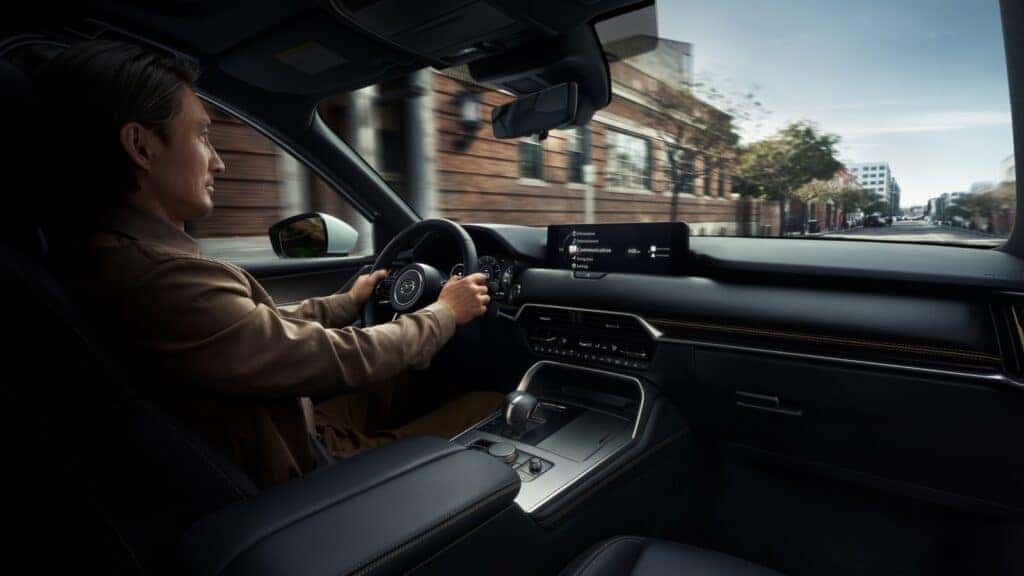
Families across Longwood, Altamonte Springs, and Sanford cross-shopping three-row SUVs usually land on the same two names: the Mazda CX-90 and the Toyota Highlander. Both seat up to eight and offer hybrid technology, and both are built for the daily grind of school runs and I-4 commutes. Once you dig into the Mazda CX-90 vs. Toyota Highlander specs, though, the two vehicles reveal very different priorities. If you’d like to see the CX-90 in person first, you can explore the 2026 CX-90 lineup at Sport Mazda North.
2026 Mazda CX-90 vs. 2026 Toyota Highlander: Which Three-Row SUV Wins
Which one wins depends on what you value most in a family SUV. The CX-90 vs. Highlander debate really comes down to performance and cabin quality versus straightforward practicality. The CX-90 is built around an inline-6 engine and a rear-biased AWD system that rewards drivers who want a more engaging ride, while the Highlander leans on efficiency and predictability, the formula that’s made it a longtime favorite for buyers who just want a reliable people-mover. That split in priorities shows up everywhere else in this comparison.
Mazda CX-90 Inline-6 and PHEV Options
The e-SKYACTIV G 3.3L Inline-6 Turbo produces 280 horsepower and 332 lb-ft of torque in the CX-90 3.3 Turbo, paired with an 8-speed SKYACTIV-Drive automatic and a 48V M-Hybrid Boost system that smooths out low-speed acceleration. Step up to the CX-90 3.3 Turbo S and that same engine family delivers 340 horsepower and 369 lb-ft on premium fuel, or 319 horsepower on regular 87-octane.
For buyers who want electrified driving without giving up performance, the CX-90 PHEV pairs a 2.5L four-cylinder with an electric motor and 17.8-kWh battery for 323 horsepower and 369 lb-ft, plus 26 miles of EV-only range.
Toyota Highlander Gas and Hybrid Options
Toyota’s approach favors fuel efficiency over outright power. The Highlander’s 2.4L turbo four-cylinder produces 265 horsepower and 310 lb-ft, while the Highlander Hybrid delivers 243 net combined horsepower with Sport, Eco, and Normal drive modes for adjusting throttle response. It’s a capable, well-proven setup, but in a Mazda CX-90 vs. Toyota Highlander reliability and performance comparison, the Highlander is tuned for smooth, predictable driving rather than outright quickness.
Towing Capacity and AWD Systems
Both automakers rate their gas-powered models similarly, but trim level matters here as much as brand, and how each SUV sends power to the wheels differs quite a bit.
CX-90 Rear-Biased i-Activ AWD and Towing
Mazda’s i-Activ AWD system is rear-biased and always engaged, proactively shifting torque before wheel slip even happens rather than reacting after the fact. Towing depends on trim: the 3.3 Turbo Select and Preferred are rated at 3,500 lbs, while the 3.3 Turbo Premium Sport and Premium Plus and both 3.3 Turbo S models step up to 5,000 lbs with Mi-Drive Towing mode and Mazda Genuine Towing Accessories. For Sanford-area families who spend weekends hauling boats out to the lakes, that means the Premium Sport is the entry point worth looking at. The CX-90 PHEV is rated to tow 3,500 lbs.
Highlander AWD and Towing Capability
For 2026, Toyota made AWD standard across the gas Highlander lineup, dropping the LE grade and the front-drive versions of the grades that remain, a real shift from prior model years. The base XLE uses a conventional AWD setup; Dynamic Torque Vectoring AWD with Multi-Terrain Select is reserved for the XSE, Limited, and Platinum grades.
The Highlander Hybrid uses a separate Electronic On-Demand AWD system with a rear electric motor and now comes in XLE, Limited, and Platinum only. Gas Highlanders tow up to 5,000 lbs across the range, while the Highlander Hybrid is rated at 3,500 lbs, on par with the CX-90 PHEV.
Fuel Economy: Hybrid and PHEV Efficiency
If fuel economy is your top priority, the electrified powertrains from both brands tell very different stories depending on how you drive. The CX-90 3.3 Turbo earns an EPA-estimated 23/28/25 mpg city/highway/combined, respectable for an inline-6 SUV with this much power. The CX-90 PHEV jumps to 56 MPGe combined thanks to its 26-mile electric range, making it a strong option for drivers who can charge at home and handle most errands in Longwood or Altamonte Springs on electricity alone. Toyota’s Highlander Hybrid answers with 35 mpg combined, a strong figure for a conventional hybrid but not built around plug-in charging the way the CX-90 PHEV is.
Buyers weighing the CX-90 PHEV against the Highlander Hybrid should factor in daily commute distance and access to home charging before deciding which efficiency approach fits their routine.
Seating, Interior Quality, and Cargo Usability
Space and comfort matter just as much as power for families who spend hours in these vehicles each week, and this is where cabin materials start to separate the two SUVs. You can explore the 2026 CX-90 lineup at Sport Mazda North to see the available seating configurations in person.
Seating Configurations for 7 or 8 Passengers
Both SUVs offer 7- or 8-passenger configurations, but the details differ. The CX-90 3.3 Turbo Select and Preferred seat eight on a second-row bench, while the Premium Sport, Premium Plus, and Turbo S Premium Sport add optional second-row captain’s chairs that bring seating to seven, and the Turbo S Premium Plus comes with captain’s chairs and a center console as standard. The CX-90 PHEV Preferred seats seven with a bench and a 50/50-split third row.
Cargo space measures 14.9 cu ft behind a three-seat third row and 74.2 cu ft with the second and third rows folded, or 15.9 cu ft and 75.2 cu ft with the two-seat third row the PHEV Preferred uses. The Highlander also offers captain’s chairs or a bench on the gas XLE and Limited and the Hybrid XLE, with cargo space reaching up to 84.3 cu ft maximum. Families in Longwood who regularly carpool with teenagers or adult passengers in the third row get 30.4 inches of legroom back there in the CX-90 against the Highlander’s 28.0, which makes it worth a closer look during a test sit.
Cabin Materials and Premium Feel
Materials and screen size are where the CX-90 separates itself most clearly. Every CX-90 above the base Select gets a 12.3-inch center display with wireless Apple CarPlay and Android Auto, wireless phone charging, and three-zone automatic climate control, which is standard on all nine trims. Leather is standard from the 3.3 Turbo Preferred, and Nappa leather arrives on the 3.3 Turbo Premium Plus. Bose 12-speaker audio is standard on every Premium Sport and Premium Plus trim.
The Highlander counters with an 8.0-inch touchscreen standard, a 12.3-inch system available on XLE and XSE and standard on Limited and Platinum, along with an 11-speaker JBL system, three-zone climate control, Qi charging, and a panoramic roof on Platinum. Both cabins are well equipped, but the CX-90 puts the bigger screen and richer materials in reach several trims earlier.
Cargo Space and Everyday Loading
Volume is where the Highlander answers back. It holds 16 cu ft behind the third row, 48.4 cu ft behind the second, and 84.3 cu ft with both rows folded, ahead of the CX-90 at every stage. The CX-90 counters on how the space is shaped and equipped. Its liftgate opening measures 43.5 inches across, the floor stretches 52.9 inches with the third row down, and cargo area storage boxes with under floor storage are standard on all nine trims, which keeps loose gear off the load floor. Hands-free liftgate operation is standard on every Highlander grade and arrives on the CX-90 from the Premium Sport up.
If maximum volume settles it, the Highlander wins. If you are loading groceries and sports bags more often than furniture, the gap matters less on a Tuesday than it does on paper.
Technology and Safety Features
The numbers here matter more than marketing claims. The 2026 CX-90, across both gas and PHEV models, earned the IIHS TOP SAFETY PICK+ award and a 5-Star Overall rating from NHTSA, a strong, independently verified result for a three-row family SUV. The Highlander comes standard with Toyota Safety Sense 2.5+, and IIHS rates it good in the updated side test and good in the small overlap frontal test, but only marginal in the updated moderate overlap frontal test, which weighs how well a vehicle protects rear-seat passengers. That result kept the Highlander off the 2026 Top Safety Pick list entirely. Between the two, the CX-90’s TOP SAFETY PICK+ distinction gives safety-focused buyers a clearer answer.
Value Comparison: Premium Feel vs. Practical Value
Pricing between these two SUVs overlaps more than most buyers expect once you compare comparable trims. According to Mazda, the CX-90 3.3 Turbo Select AWD starts at $39,300, with the Preferred at $43,450, the Premium Sport at $47,480, and the Premium Plus at $50,270. The CX-90 PHEV Preferred starts at $50,695, the Turbo S Premium Sport at $54,140, the Turbo S Premium Plus at $57,570, and the PHEV Premium Plus tops the lineup at $58,700, all excluding Mazda’s $1,645 destination and handling charge.
On the Toyota side, Toyota lists the gas Highlander XLE AWD at $46,270 and the Highlander Hybrid XLE AWD at $48,020, with the Hybrid Limited at $52,475 and the Hybrid Platinum at $55,675, before the Dealer Processing and Handling fee.
Whichever direction you’re leaning, our team can help you explore financing options to find a payment structure that fits your budget. Sport Mazda North’s inventory also lets North Orlando buyers compare CX-90 trims side by side in person, which makes it easier to decide between the Turbo, Turbo S, and PHEV before committing.
Why the CX-90 Stands Out for Performance and Luxury
The CX-90 pulls ahead in the categories that matter most to families who want more than just a practical box on wheels. Its inline-6 lineup outmuscles Toyota’s turbo-4 offerings, its rear-biased i-Activ AWD is engineered to respond before slip occurs rather than after, and its cabin uses noticeably richer materials throughout. The CX-90’s IIHS TOP SAFETY PICK+ award and 5-Star NHTSA rating give it a safety record the Highlander’s mixed IIHS test results don’t quite match. For Central Florida families who want performance, comfort, and a strong safety record without compromise, the CX-90 is hard to beat.
Test Drive the 2026 Mazda CX-90 at Sport Mazda North
If you’ve been weighing the CX-90 vs. Highlander decision, the best next step is getting behind the wheel of both.
Visit Us in Longwood
We invite Longwood, Altamonte Springs, Sanford, and Winter Park drivers to visit Sport Mazda North at 400 North US Hwy 17-92 in Longwood, where our team has served North Orlando for nearly 50 years.
Schedule Your Visit
You can schedule a test drive or call our sales team at 321-300-7266 to compare CX-90 trims in person and see firsthand why so many families are choosing Mazda’s inline-6 performance and premium cabin over the alternative.
0 comment(s) so far on 2026 Mazda CX-90 vs. 2026 Toyota Highlander