



2026 Mazda CX-90 vs. 2026 Toyota Grand Highlander
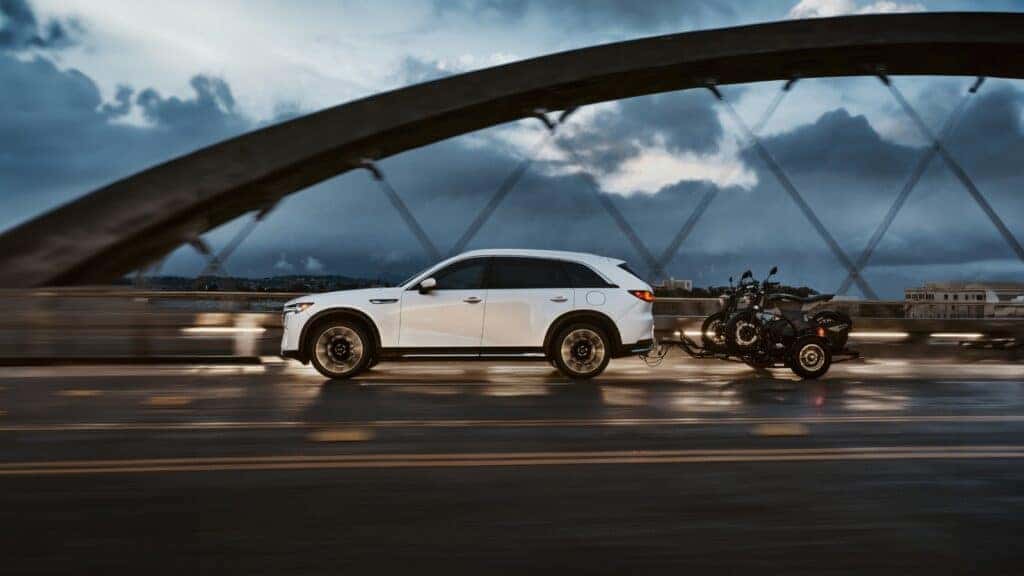
Finding a three-row SUV that actually earns its price tag is trickier than it looks. You want room for the whole family, a powertrain you can trust on long hauls, and an interior that doesn’t feel like an afterthought. Both the 2026 Mazda CX-90 and 2026 Toyota Grand Highlander make a compelling case for themselves, just in very different ways. We put this side-by-side comparison together to help Central Florida families cut through the noise and find the right fit. If you’re ready to see the CX-90 in person, browse our current CX-90 inventory at Sport Mazda North in Longwood.
This debate really comes down to two distinct philosophies. Mazda approaches this segment like a premium automaker, leaning into driving refinement, high-grade materials, and a design language that stands out in a parking lot full of boxy competitors. Toyota takes a more practical stance, building a capable family hauler with broad powertrain choices and a focus on passenger volume. Knowing where each one wins and loses makes the final call a lot easier.
Performance and Powertrain: Gas Models First, Then Electrified
Both vehicles offer gas and electrified options, but the engines tell very different stories about what each brand actually prioritizes.
| Feature | CX-90 PHEV | CX-90 Inline-6 (Turbo) | CX-90 Inline-6 (Turbo S) | Grand Highlander Gas (2.4T) | Grand Highlander Hybrid | Grand Highlander Hybrid MAX |
| Engine/Powertrain | 3.3L turbo I-6 + plug-in hybrid | 3.3L turbo I-6 | 3.3L turbo I-6 | 2.4L turbo I-4 | 2.5L NA I-4 hybrid | 2.4L turbo I-4 hybrid |
| Horsepower | 323 hp | 280 hp | 340 hp | 265 hp | 245 hp | 362 hp |
| Torque | 369 lb-ft | 332 lb-ft | 369 lb-ft | 310 lb-ft | — | 400 lb-ft |
| Fuel Economy | 27 mi EV range | 25 combined MPG | 25 combined MPG | 24 combined MPG (FWD); 22–23 combined MPG (AWD) | 36 combined MPG (FWD); 34 combined MPG (AWD) | 27 combined MPG |
| Towing Capacity | 3,500 lbs | 3,500 lbs | 5,000 lbs | 5,000 lbs | 3,500 lbs | 5,000 lbs |
| Cargo (Behind 3rd Row) | 14.9–15.9 cu ft* | 14.9–15.9 cu ft* | 14.9–15.9 cu ft* | 20.6 cu ft | 20.6 cu ft | 20.6 cu ft |
\*14.9 cu ft with three-seat third row; 15.9 cu ft with two-seat third row.
Gas vs. Gas: CX-90 Inline-6 Turbo Against Grand Highlander’s 2.4T Four-Cylinder
The CX-90’s 3.3L turbocharged inline-6 is one of its strongest selling points. Six-cylinder engines have an inherent smoothness that four-cylinders simply can’t replicate, and Mazda takes full advantage of that here. The Turbo produces 280 hp and 332 lb-ft of torque; the Turbo S steps things up to 340 hp and 369 lb-ft.
Power delivery is linear and confident, and the engine stays refined even when you’re pushing hard onto a highway on-ramp. All CX-90 trims come standard with rear-biased i-Activ AWD, so you’re not paying extra for capable traction management.
The Grand Highlander’s 2.4-liter turbocharged four-cylinder makes 265 hp and 310 lb-ft. It does its job well enough, but drive both back to back and the gap in refinement becomes genuinely noticeable. The Toyota lacks the polished, vibration-free delivery that makes the CX-90’s inline-6 feel special. The Grand Highlander gas model comes standard with FWD on the LE, XLE, and Limited trims, with AWD available as a $1,600 upgrade. The Platinum trim comes standard with AWD.
That means buyers who want the traction benefits of AWD on most Grand Highlander trims will pay extra for it, unlike the CX-90, where i-Activ AWD is standard across the entire lineup at no additional cost. FWD models return 24 combined MPG. AWD trims vary by grade: the LE and XLE AWD return 23 combined MPG, while the Limited AWD and Platinum AWD drop to 22 combined MPG.
Electrified Options: CX-90 PHEV vs. Grand Highlander Hybrid and Hybrid MAX
The CX-90 PHEV has a structural advantage: it’s a plug-in hybrid with 27 miles of EPA-rated EV range. For North Orlando commuters navigating stop-and-go stretches of I-4 or SR-417, that electric range means many daily drives happen without ever touching the gas pump. The PHEV pairs that electric capability with the same 3.3L inline-6 for a combined 323 hp and 369 lb-ft. If you’d like to understand how financing a PHEV model works, we’re happy to help you explore financing options at Sport Mazda North.
Toyota’s Grand Highlander offers two hybrid configurations worth knowing. The standard Hybrid uses a 2.5L system producing 245 hp and achieves up to 36 combined MPG in FWD configuration, or 34 combined MPG with AWD, making it one of the more fuel-efficient options in this class.
The Hybrid MAX pairs a 2.4L turbo four-cylinder hybrid system for 362 hp and 400 lb-ft, with 27 combined MPG and 5,000 lbs of towing capacity. Neither can run on electricity alone, but both deliver real-world efficiency gains. The right choice between PHEV and hybrid comes down largely to whether you can charge at home or work.
Driving Character and Refinement
Get behind the wheel of the CX-90 and it’s immediately clear that Mazda engineered this SUV to be driven, not just occupied. The steering is responsive, body roll is well-controlled, and two proprietary systems work together to sharpen the experience.
G-Vectoring Control Plus manages torque distribution between the front and rear wheels to smooth out cornering transitions, while Kinematic Posture Control applies subtle braking to the inside rear wheel during turns to improve stability. On curvier roads, the CX-90 feels more like a large sedan than a three-row family hauler. That distinction is especially noticeable on the kind of winding suburban routes common throughout Central Florida.
The Grand Highlander prioritizes ride comfort over driver engagement, which is a deliberate design choice rather than a flaw. It absorbs road imperfections smoothly and keeps the cabin settled and quiet at highway speeds. Families spending most of their time on interstates will genuinely appreciate that relaxed character.
But if you’re the kind of driver who notices the difference between a vehicle that transports you and one that connects you to the road, the CX-90 wins this category clearly.
Interior Quality and Cabin Experience
Step inside the CX-90 and the quality is apparent right away. Mazda’s KODO design philosophy focuses on reducing visual clutter and using premium materials consistently throughout the cabin. Higher trims bring Nappa leather upholstery, genuine wood accents, and soft-touch surfaces wherever your hands and eyes land most often.
The overall atmosphere is calm and sophisticated, closer to what you’d expect from a German luxury brand than a mainstream family hauler. Controls stay within natural reach, and Mazda avoids the screen-for-everything approach that clutters some competitors’ dashboards.
The Grand Highlander’s interior is functional and well-executed, but it doesn’t reach the same level of material refinement. Toyota compensates with smart storage placement and a user-friendly infotainment layout that’s genuinely easy to live with daily.
If practicality and ease of use matter more than premium ambiance, the Grand Highlander holds its own. In a direct comparison focused on cabin quality, though, the CX-90 holds a meaningful edge.
Third-Row Comfort and Passenger Space
Third-row seating is often the great compromise in this class. The CX-90 handles it better than most, offering reasonable legroom for adults on occasional use and better-than-average access to that rearmost row.
The Grand Highlander’s larger overall dimensions give it a clear passenger volume advantage. It seats up to eight, a configuration the CX-90 doesn’t match. Families who regularly fill all three rows will notice more usable space, particularly in the second row. If your household consistently needs seating for seven or eight people, that capacity advantage is real and worth factoring into your decision.
Cargo Space and Everyday Practicality
Raw cargo numbers favor the Grand Highlander. With all rows up, Toyota offers 20.6 cubic feet behind the third row versus 14.9 to 15.9 cubic feet in the CX-90, depending on whether you choose the three-seat or two-seat third-row configuration.
Maximum cargo capacity expands to 97.5 cubic feet in the Grand Highlander, compared to 74.2 to 75.2 in the CX-90. Toyota also states the Grand Highlander can hold seven small roller bags with the third row in place, which is a useful real-world benchmark for family road trips departing from the Orlando area.
The CX-90 still delivers competitive flexibility through its configurable seating, and for families who use the third row occasionally rather than daily, the cargo difference matters less. If hauling capacity is your top priority, the Grand Highlander has the advantage.
Fuel Economy and Towing Capacity
Fuel economy is one area where the Grand Highlander, particularly in Hybrid form, performs very well. The standard Hybrid’s up to 36 combined MPG in FWD form is among the best in this segment, though AWD trims, which are standard on most Hybrid grades, return 34 combined MPG.
The CX-90 PHEV matches that efficiency for short electric-range trips when charged regularly, while the standard CX-90 inline-6 returns 25 combined MPG.
On towing, the two vehicles are more closely matched than the numbers suggest. The CX-90 Turbo S and Grand Highlander Hybrid MAX both tow up to 5,000 lbs when properly equipped. Standard CX-90 trims and the Grand Highlander Hybrid both cap at 3,500 lbs.
For most buyers comparing these two, towing capacity will only matter if you’re regularly pulling a boat or trailer.
Which Three-Row SUV Is Right for You?
The right choice depends heavily on how you actually use a three-row SUV.
The CX-90 is the stronger fit if:
- You commute regularly on I-4 or SR-417 and want the CX-90 PHEV’s 27-mile EV range to reduce fuel costs on daily North Orlando driving.
- You want the smoothness of an inline-6 engine and the dynamic confidence of G-Vectoring Control Plus and Kinematic Posture Control on every drive.
- You prioritize a cabin that feels genuinely premium, with Nappa leather and real wood trim rather than functional-but-plain materials.
The Grand Highlander is the stronger fit if:
- You regularly carry seven or eight passengers and need every seat to be usable on longer trips.
- Fuel efficiency is your primary concern and you don’t plan to plug in, making the Hybrid’s 36 combined MPG in FWD or 34 combined MPG in AWD a clear advantage over the standard CX-90 inline-6’s 25 combined MPG.
- You regularly tow a boat to a Central Florida lake and want the Hybrid MAX’s 5,000-lb capacity combined with stronger fuel economy.
Schedule a Test Drive at Sport Mazda North
Neither of these SUVs is a compromise pick. Both are well-built vehicles with strong reputations. The difference is in the experience they deliver, and there’s no substitute for feeling it yourself. We’d love for you to contact us at Sport Mazda North to schedule a test drive of the 2026 Mazda CX-90 at our Longwood location, where we serve drivers from North Orlando, Altamonte Springs, Sanford, and the surrounding area.
Our sales team is available Monday through Saturday from 9:00 AM to 8:00 PM and Sunday from 12:00 PM to 5:00 PM, or you can reach us directly at 321-300-7266.
0 comment(s) so far on 2026 Mazda CX-90 vs. 2026 Toyota Grand Highlander